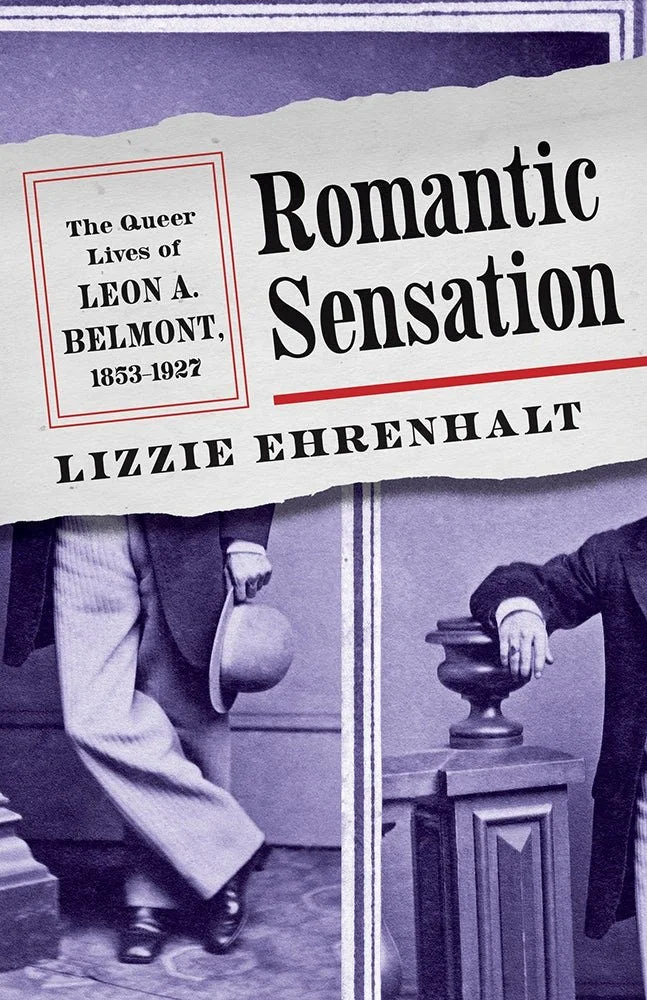
Romantic Sensation:
The Queer Lives of Leon A. Belmont, 1857–1927
Addie Liona Walker. Leon A. Belmont. Nova McClure Carr. Romantic Sensation tells the full story of this one ordinary person’s singular life. Assigned a female sex at birth, Addie was born in Massachusetts in 1853 and lived as a woman for twenty-five years. After transitioning in 1878, Addie became Leon and lived as a man for twenty-four years before making a second gender transition and living as a woman, Nova, for the rest of her life. Placing these milestones within the historical context of the late nineteenth and early twentieth centuries, Lizzie Ehrenhalt traces Belmont’s life, from child laborer to husband, from outlaw to heartthrob, and from stepfather to single mother.
Belmont was a Gilded Age celebrity: he made national news for breaking an ordinance against dressing as the “opposite” sex in Minneapolis, and he inspired a media frenzy when one of his girlfriends told police that he was a woman. While newspapers labeled Belmont a “curious and romantic sensation,” Ehrenhalt shows that he was not much of a sensation after all. Illuminating what his story can tell us about Americans’ developing understandings of sexuality and gender in the 1850s through the 1920s, she reveals how Belmont’s run-ins with police, doctors, courts, and reporters resonate in the evolution of the LGBTQIA+ identities we recognize today.
An empathetic case study of a figure often denied respect in the telling of his story, Romantic Sensation presents Belmont’s gender transitions as acts grounded in the cultural milieu of the Gilded Age. Ehrenhalt uses Belmont’s example to demonstrate how trans, queer, and intersex histories are inseparable from American history.
University of Minnesota Press, 2026
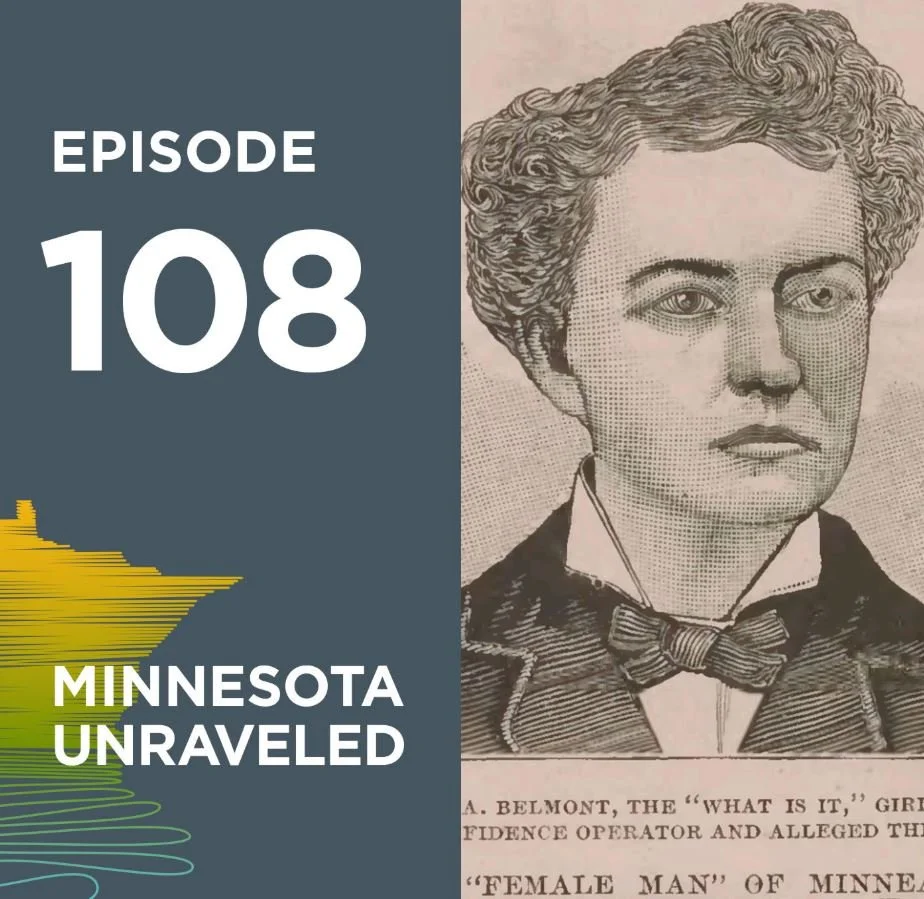
Leon Belmont: Gender and Celebrity in Minneapolis in 1880
In 1880, a court case rocked Minneapolis society and ruled the newspaper headlines. It was the case of Leon Belmont, a man accused of fraud. Authorities claimed that he was a woman wearing men’s clothing, passing herself off as a man. Why so much uproar over this particular case? And was it for the reasons we’d expect?
Historian and host Dr. Chantel Rodríguez explores what life looked like in late 1800s Minneapolis, why fraud might’ve been top of mind, and how historians make responsible histories. To get more insight into these questions and more, Chantel sat down with public historian Lizzie Ehrenhalt and PhD candidate Myra Billund-Phibbs.